Cut Like a Pro – Learn Safe and Effective Knife Skills

Cut Like a Pro – Learn Safe and Effective Knife Skills
A sharp knife and the right technique are the keys to both safety and efficiency in the kitchen. Whether you’re chopping onions, slicing meat, or filleting fish, how you hold and move your knife makes all the difference. Many kitchen accidents happen not because the knife is too sharp, but because it’s used incorrectly. Here’s your guide to cutting like a professional—safely and effectively.
Choose the Right Knife for the Job
No single knife can do it all. Professional chefs rely on several types, each designed for specific tasks.
- Chef’s knife – the most versatile. Ideal for vegetables, meat, and herbs.
- Paring knife – small and precise, perfect for peeling and detail work.
- Serrated knife – with a saw-like edge, great for bread and tomatoes.
- Boning or fillet knife – thin and flexible, made for fish and meat with bones.
A good rule of thumb: your knife should feel like an extension of your hand. It should have a comfortable grip and a weight you can control easily.
Hold the Knife Correctly
Many people hold a knife like a hammer, which limits control. The professional grip is to pinch the blade between your thumb and index finger, just in front of the handle, while wrapping your other fingers around the handle. This gives you stability and precision.
When cutting, let the motion come from your shoulder and elbow—not your wrist. Think of it as a gentle rocking motion, where the tip of the knife often stays in contact with the cutting board as you move the blade forward and back.
Protect Your Fingers – The “Claw Grip”
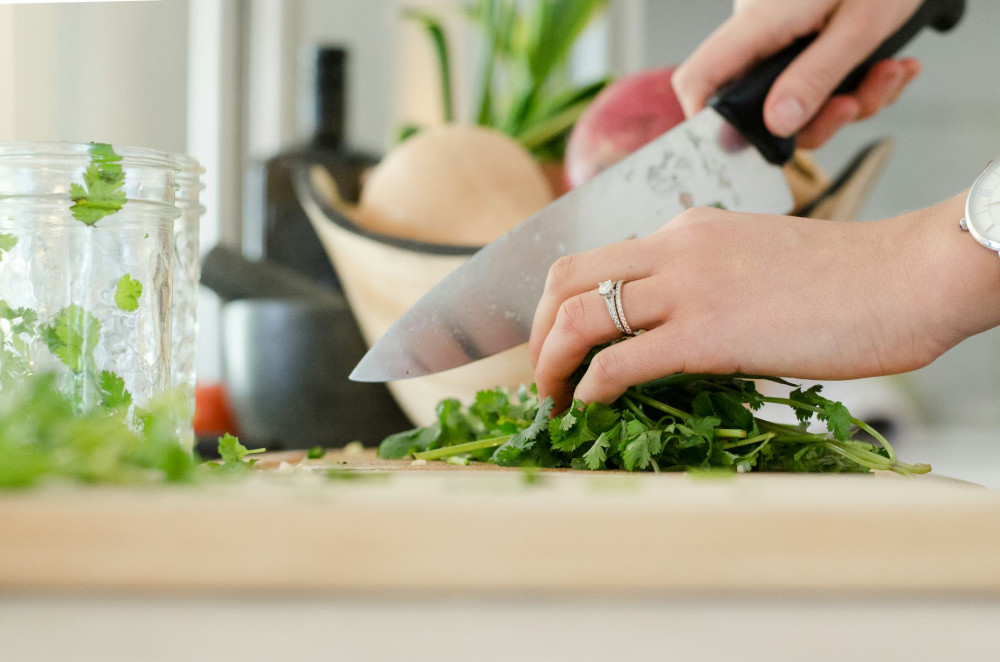
The hand holding the food is just as important as the one holding the knife. Use what chefs call the claw grip: curl your fingertips slightly inward so the side of the knife rests against your knuckles instead of your fingertips. This way, you guide the knife safely and avoid cuts.
It takes a bit of practice, but once you get used to it, it becomes second nature—and you’ll work faster and more confidently.
Læs også:


Cut with Sharpness, Not Force
A dull knife is more dangerous than a sharp one. When the blade doesn’t glide easily through food, you use more force, increasing the risk of slipping. Always keep your knives sharp—use a honing steel regularly, sharpen with a whetstone, or have them professionally sharpened.
A quick test: try slicing through a sheet of paper. A sharp knife will cut cleanly without tearing.
Use the Right Cutting Surface
A stable cutting board is essential. Avoid glass or metal boards—they’ll dull your knives quickly. Choose wood or plastic, and place a damp towel underneath to keep the board from sliding.
Keep your board clean, especially after cutting raw meat or fish. To prevent cross-contamination, use separate boards for meat and produce.
Everyday Cutting Techniques
Once you’ve mastered your grip and motion, you can refine your technique for common kitchen tasks:
- Chopping onions: Cut the onion in half, make horizontal and vertical cuts without slicing through the root, then chop across for even dice.
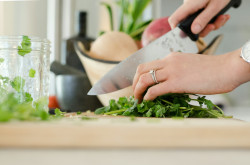
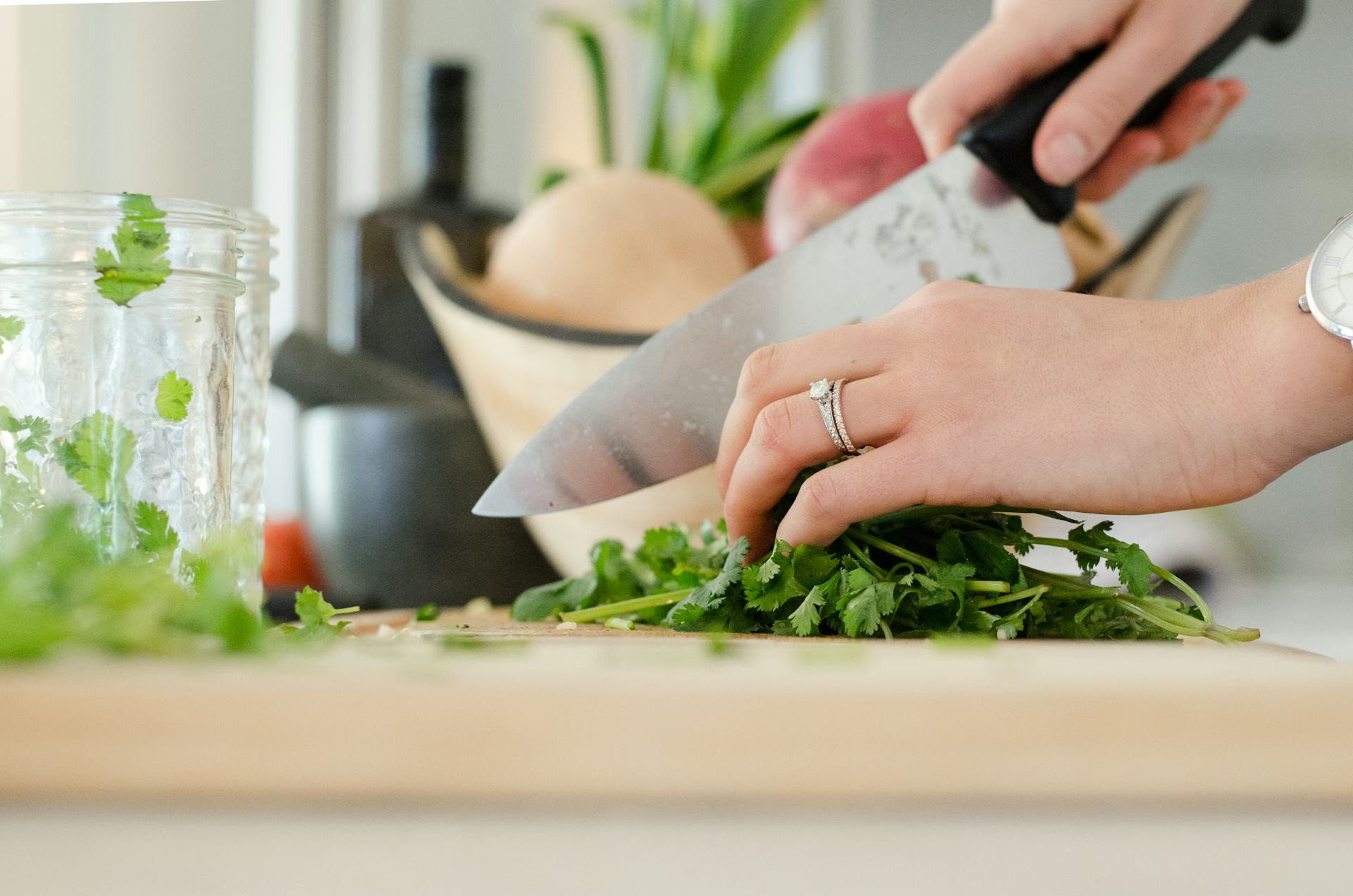
- Slicing herbs: Gather herbs into a small pile and use a rocking motion, keeping the knife tip on the board.
- Cutting meat: Slice across the grain for more tender pieces.
The more you practice, the more natural your movements will feel. Start slowly and focus on accuracy before speed.
Safety First – Even When Cleaning Up
When you’re done, never leave knives loose in the sink. Wash them by hand right away, dry them thoroughly, and store them safely. Use a knife block, magnetic strip, or blade guard to protect both the edge and your hands.
Cut Like a Pro – With Calm and Respect
Mastering knife skills isn’t about cutting fast—it’s about working calmly, safely, and with respect for your tools. A good knife and proper technique make cooking more enjoyable and efficient, and you’ll soon find that even simple tasks like chopping vegetables feel like true craftsmanship.
Læs også: